
BitcoinWorld
KOSPI Circuit Breaker Triggered After Sharp Market Decline: What Investors Need to Know
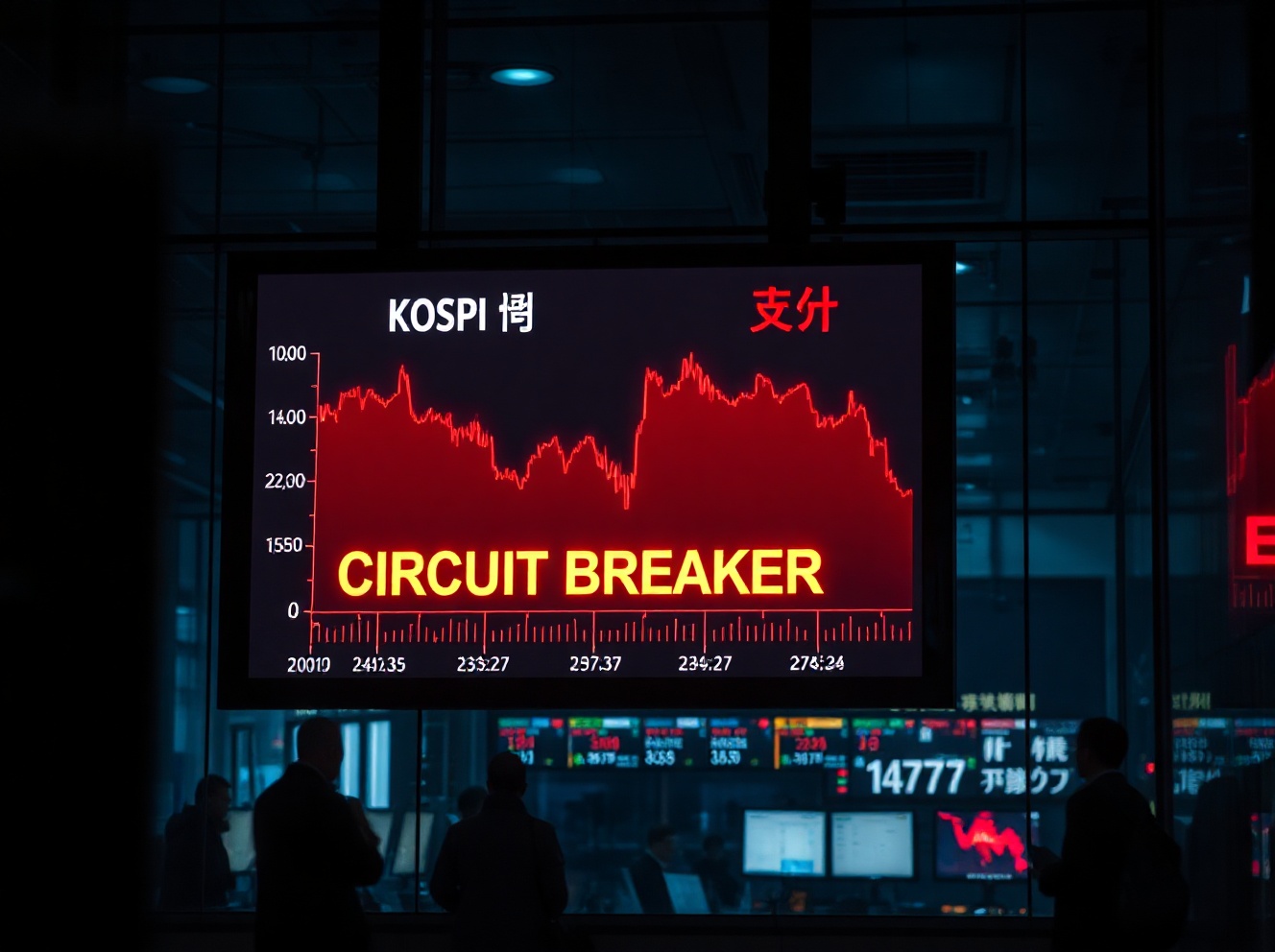
South Korea’s benchmark KOSPI index triggered a circuit breaker on [Date] after a sudden and steep decline, temporarily halting trading on the Korea Exchange. The move, designed to prevent panic selling and give markets time to digest information, underscores growing volatility in Asian equities amid global economic uncertainties.
What Happened and Why It Matters
The KOSPI fell by more than 8% in a single session, breaching the threshold that activates a sidecar — a 20-minute trading halt on index futures and options. This is a rare event, typically reserved for periods of extreme market stress. The last time a circuit breaker was triggered on the KOSPI was during the COVID-19 pandemic sell-off in March 2020.
The sharp decline was attributed to a combination of factors: disappointing export data from China, renewed concerns over U.S. interest rate policy, and a sell-off in technology stocks led by semiconductor heavyweight Samsung Electronics. Foreign investors were net sellers, adding to the downward pressure.
How Circuit Breakers Work on the KOSPI
The Korea Exchange operates a three-tier circuit breaker system for the KOSPI. The first level triggers a 20-minute halt when the index falls 8% or more from the previous close. If the decline reaches 15%, a second halt is triggered, and a 20% drop triggers a full trading suspension for the day. These mechanisms are designed to curb excessive volatility and allow traders to reassess positions.
Implications for Investors and Markets
For retail and institutional investors alike, the activation of a circuit breaker signals heightened risk. While the halt provides a cooling-off period, it can also amplify anxiety if the underlying causes of the sell-off persist. Analysts are closely watching whether the Bank of Korea will intervene with market stabilization measures, such as emergency liquidity injections or verbal intervention.
The broader implications extend beyond South Korea. As a bellwether for global trade and technology supply chains, the KOSPI’s movements often foreshadow trends in other Asian markets, including Japan’s Nikkei and Hong Kong’s Hang Seng Index.
Conclusion
The triggering of the KOSPI circuit breaker is a significant market event that reflects deep investor unease. While the mechanism itself is a routine safeguard, the circumstances surrounding it — weak external demand, tech sector pressure, and global monetary policy uncertainty — warrant close attention. Investors should monitor upcoming economic data releases and central bank signals for further direction.
FAQs
Q1: What is a circuit breaker in the stock market?A circuit breaker is a regulatory mechanism that temporarily halts trading on an exchange when a benchmark index falls by a predetermined percentage. It is designed to prevent panic selling and give investors time to absorb new information.
Q2: How long does a KOSPI circuit breaker last?The initial halt lasts 20 minutes. During this time, index futures and options trading is suspended, though individual stock trading may continue under certain conditions. If the decline deepens, additional halts or a full-day suspension may follow.
Q3: Should I sell my KOSPI holdings after a circuit breaker?Market halts are not a signal to sell or buy. They are a procedural pause. Investors should evaluate their portfolio based on long-term goals and the underlying reasons for the decline, rather than reacting to short-term volatility. Consulting a financial advisor is recommended.
This post KOSPI Circuit Breaker Triggered After Sharp Market Decline: What Investors Need to Know first appeared on BitcoinWorld.
